Wiki home » Denim Explained » Selvedge
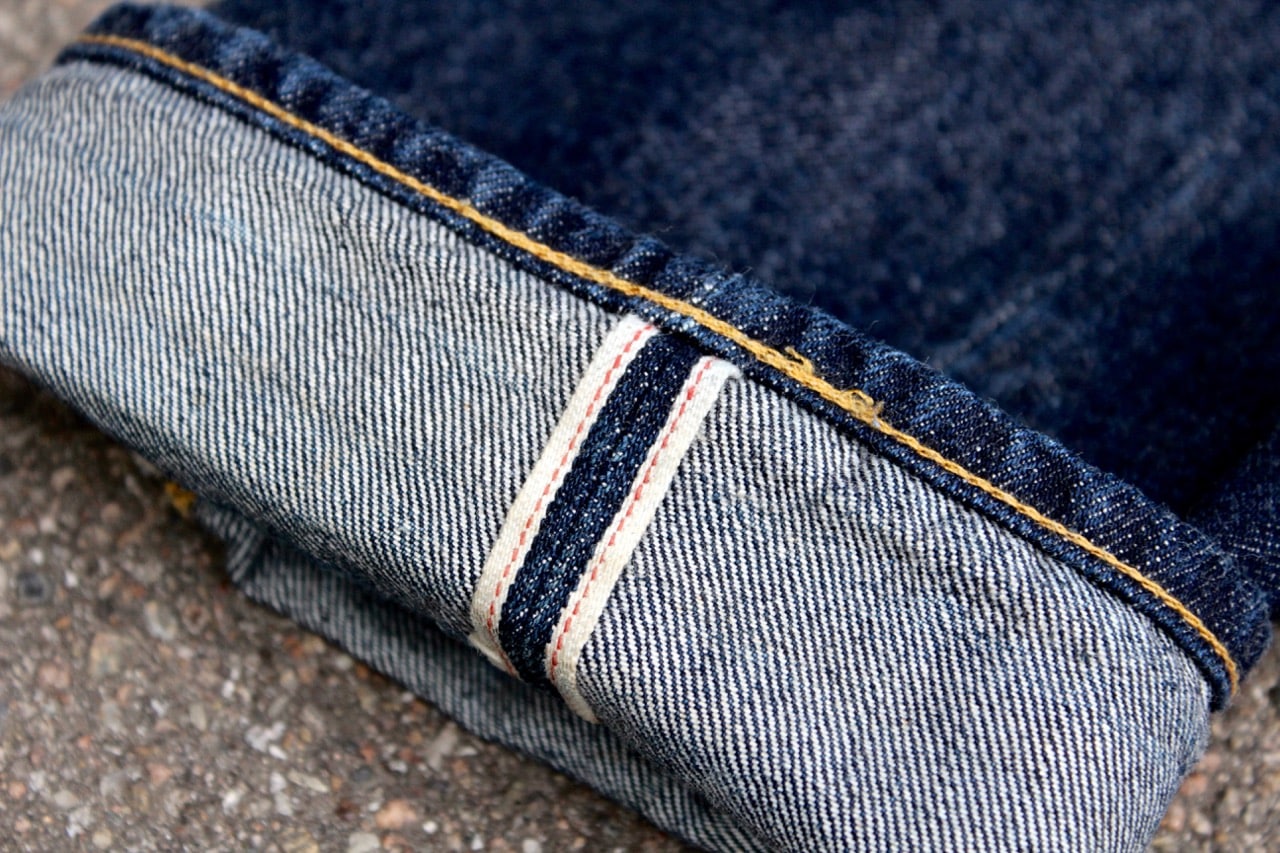
You’ve seen it on the cuff of a good pair of jeans—that clean, tightly woven edge, often finished with a red line. That’s selvedge denim.
It’s become a badge of honour among denimheads, a shorthand for quality. But despite what many think, selvedge doesn’t mean raw. It doesn’t mean handmade. And it doesn’t mean indestructible.
Let’s clear up what it actually does mean—and why it matters.
What Does ‘Selvedge’ Mean?
The word “selvedge” comes from “self-edge.” It refers to the clean edges created when denim is woven on shuttle looms—the old-school kind used before mass production took over.
Because the weft yarn is passed back and forth in one continuous line, it locks the edge in place. There’s no need to trim or overlock the fabric. The result is a neat border that doesn’t fray.
“Selvedge” is also commonly spelled “selvage” in American English. Both refer to the same thing: the self-finished edge of shuttle-loomed denim.
That edge is often highlighted with a coloured yarn—most famously red, known as redline selvedge.
👉 Important: “Selvedge” tells you how the fabric is woven. It does not mean the denim is raw (unwashed), nor does raw denim have to be selvedge.
How Selvedge Denim Is Made
There are two main ways to weave denim: with a shuttle or without one.
Shuttle Weaving (Selvedge Denim)
A shuttle loom passes the weft yarn back and forth across the warp in a continuous motion. This creates a narrow fabric—usually about 30 inches wide—with clean edges.
Because these machines are slower and harder to maintain, production is limited. But the result is fabric with natural slubs, soft handfeel, and a lo-fi texture that denimheads can’t get enough of.
Shuttleless Weaving (Standard Denim)
Most denim today is made on projectile looms. Instead of a shuttle, a bullet-shaped device fires the weft yarn across. It’s faster, wider, and far more efficient.
But it leaves frayed edges that need to be cut off—so the fabric is cheaper, but loses that distinctive selvedge edge and character.
You can read much more about weaving here.
Watch: What Is Selvedge Denim?
Prefer video? Here’s a quick explanation from Thomas that breaks it down with visuals.
Is Selvedge Always Raw?
Nope. Selvedge denim can be raw, but it can also be pre-washed, and even have stretch.
Likewise, not all raw denim is selvedge. Plenty of mills produce raw denim on modern looms.
But raw and selvedge often do go hand-in-hand. That’s because both raw and selvedge appeal to the same type of wearer—someone who values quality, evolution, and the long game.
Why Is Selvedge Denim More Expensive?
A few reasons:
- Slower production: Shuttle looms weave at a fraction of the speed of modern machines.
- Narrower fabric: Less yield per roll means more cutting waste.
- More hands-on: Old looms require constant tweaking, repairs, and experience to run properly.
- Smaller batches: Selvedge denim is often produced by mills focused on craftsmanship, not scale.
In short: You’re paying for time, care, and heritage. And for a fabric that tells a story.
How to Spot Selvedge Denim
Look for:
- Coloured edge yarns (often red) running down the outseam—best seen when the jeans are cuffed.
- Product description: Most brands will highlight it (if it’s selvedge, they’ll make sure you know).
Why Denimheads Love Selvedge
It’s not just about the fabric. It’s about the philosophy.
Selvedge denim is part of a broader movement that favours craft over convenience, slowness over scale, and stories over trends. It taps into the same ethos behind loopwheel knits, Goodyear-welted boots, and handmade leather goods.
Put simply: It’s the kind of denim you buy to wear, fade, and maybe even hand down one day.
Is Selvedge Denim Better?
That depends on what you mean by “better.”
If we’re talking about durability, not necessarily. A well-made pair of non-selvedge jeans can outlast selvedge. But if we’re talking fades, texture, and character—selvedge wins every time.
Why?
- Slubs: Shuttle looms tolerate irregularities in the yarn, which creates texture and uneven fading.
- Less tension: Slower weaving puts less stress on the yarn, resulting in a softer feel.
- Personal evolution: Raw selvedge denim develops unique fades based on how you wear it.
It’s less about technical superiority and more about emotional resonance. Selvedge jeans aren’t just worn—they’re lived in.
Wiki home » Denim Explained » Selvedge