
Upcoming Projects
Projects likely to be constructed as early as summer 2025* include:
- Banner Way NE between Banner Pl and NE 77th St using precast tall curbs.
- NE Campus Pkwy between the University Bridge and Brooklyn Ave NE using a new recycled rubber material that we are excited to pilot and evaluate its durability.
- SW Andover St/SW Yancy St between Avalon and Delridge using precast tall curbs.
- E Union St between 14th Ave S and MLK using a mix of tall curbs, precast flat-top curbs along the parking and loading zones (no parking or loading zones will be changed), and wheel stops in narrow segments.
- Gilman Ave W between 31st Ave W/Government Way and W Dravus St using precast tall curbs.
- S Lander St from 5th Ave S to 6th Ave S using precast tall curbs.
- Ravenna Blvd between E Green Lake Way N to 15th Ave NE using precast tall curbs.
*Construction timelines are dependent on material and crew availability.
How are projects selected?
Locations selected for upgrades to hardened buffers are typically already existing protected bike lane facilities that have sufficient painted buffer width to install the various types of concrete or rubberized curb materials we are using, and where minimal changes are needed to the roadway channelization. Projects are prioritized using several metrics, including:
- Known maintenance requests and concerns collected from field observations, the Find-it, Fix-it App, or other emailed community service requests to the city.
- Safety metrics like vehicular speeds and volumes along a corridor, or site conditions that would benefit bikes having more concrete protection between them and vehicles.
- Partner opportunities with other projects to cost-share on traffic control or SDOT labor and outreach.
- Locations with fewer utility & driveway conflicts as we ramp up installation and continue to test materials and how to best design and deliver upgraded bike lanes. Equitable distribution across council districts to ensure we are addressing the maintenance burden fairly.
Why does SDOT use flexposts?
Currently, plastic posts (also known as flexposts or flexible delineators) are the most common material used for Seattle’s protected bike lanes and have continued to be the national industry standard for over a decade. Due to their availability and ease of installation, plastic posts have helped solve many of the challenges of planning and implementing new protected bike lanes. For example, the flexibility of plastic posts has allowed us to install protected bike lanes throughout the city in locations that may continue to require access for emergency vehicles.
The downside is that because they are flexible, plastic posts require continued maintenance and replacement when they are broken or detached. In 2024, over 700 flexposts were replaced by SDOT crews. Better bike lane upgrades can also decrease maintenance costs for the city over time.
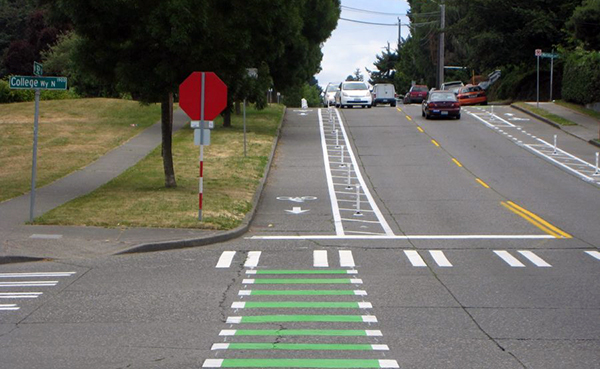
Plastic flexible posts provide separation for the protected bike lane on N 92nd St in the Licton Springs neighborhood. Photo: SDOT.
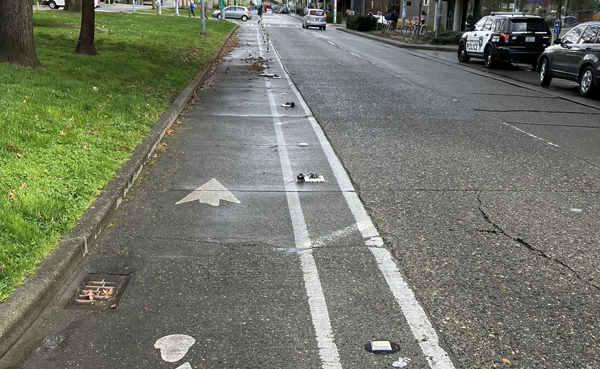
Protected bike lane on NE Campus Parkway in the University District, with posts that need to be replaced. Photo credit: Seattle Neighborhood Greenways.
What options are we testing?
When considering materials for the Better Bike Lane program, we wanted to test materials that would offer an increased level of protection for bicyclists and be more durable than the current plastic delineator posts.
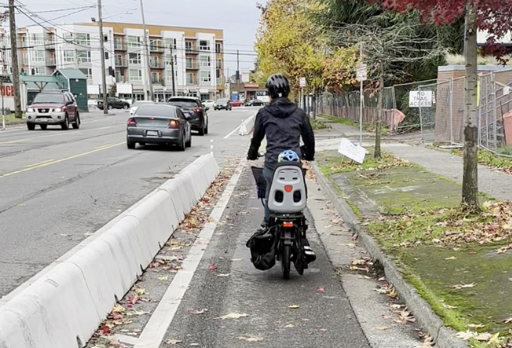
Precast Concrete Tall Curbs
This is also known as a Toronto Style Barrier. This is a durable alternative to cast in place concrete curbing, suitable for use on busy streets with wide buffers between the bike lane and travel lane.
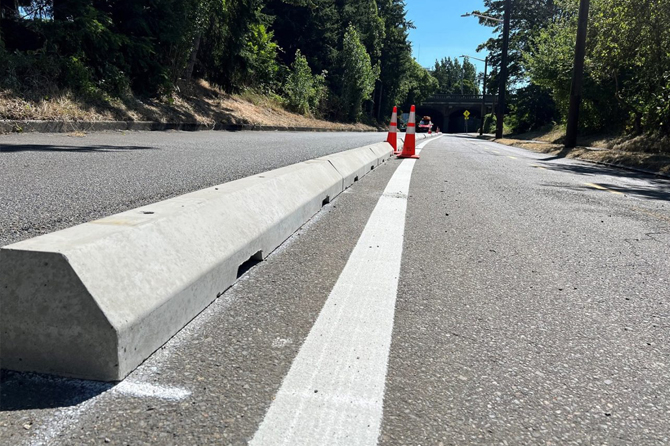
Precast Parking Stops
This is a durable barrier option useful for streets with less space between the bike and travel lane.
Armadillos
Low-cost direct replacement for flex posts with potentially better durability.
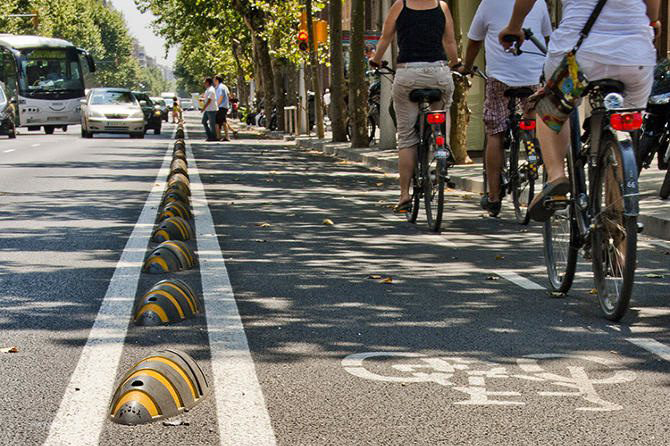
(Photo credit – Bike Delaware)
Precast Flat-Top Curbs
Useful along Seattle’s many parking-protected bike lanes because vehicles pull up alongside it the same as a sidewalk curb. Very similar to cast-in-place concrete islands but with more flexibility to space them according to drainage or loading zone needs and faster, lower-impact construction.
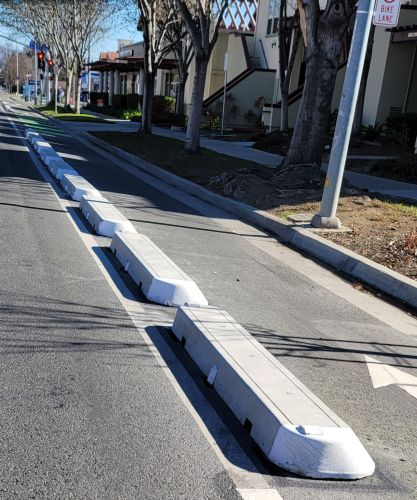
(Photo credit – Universal Precast Concrete, Inc.)
Related Projects
Georgetown to Downtown Safety Project’s Protected Bike Lane This project used the same low wall concrete curb that was recently installed on S Columbian Way as part of the Better Bike Barriers pilot.
4th Ave Upgrade This project upgraded the protected bike lane on 4th Ave in downtown Seattle using funding from a grant award to install cast-in-place buffers between Jefferson and Vine.
8th Ave Upgrade This project upgraded the protected bike lane on 8th Ave between Pike St and Westlake Ave. This project was delivered by contractors and funded by the Convention Center mitigation fund, which is supporting transportation investments near the Seattle Convention Center in downtown Seattle.
Materials
- SDOT Blog – Even Better Bike Lanes
- Council Budget Proviso
- Seattle Bicycle Advisory Board Presentation – July 2022
- Seattle Bicycle Advisory Board Presentation – December 2023