
Since leaving the states to travel full-time, Luna the traveling pooch has been to 22 European countries (and 26 countries overall).
Now, we still have plenty of Europe left to explore, but since we’ve been to so many places, I thought it might be useful to my fellow with-dog travelers if we did a bit of comparing and contrasting. Because some countries are definitely easier to navigate as a with-dog traveler than others, and it’s never a bad thing to know ahead of time what to expect.
Below, I’ve ranked every European country we’ve gone to on a scale of one to five (along with an explanation of why I’ve chosen each ranking).
One is the lowest pet-friendliness. It reflects a place where I not only had trouble getting around or finding accommodations, but actually felt unwelcome or unsafe with my dog.
Two is below average pet-friendliness. Keep in mind that I’m using a European average. Not a US average. If the US were a European country, I’d give it a two overall (though some towns are certainly better than others). In general, dogs are allowed in a very limited number of spaces in the states, and public transit (especially long-distance transit like trains) usually does not allow dogs, which makes the US tricky to navigate with pooch in tow.

Three is the average for Europe (which means at least some restaurants welcome pets, you can get around with your pet and without a car, and the general feeling about dogs is positive).
Four is exceptional. These are countries where you can take your dog almost anywhere. Take them to brunch or out for coffee. Take them to pretty much any park in any city. Take them on buses, trains, and in cabs. Find hotels easily. Your life will not be particularly tricky traveling with a dog in these countries.
And five means dogs have near-human status. The only place you probably won’t see them is the grocery store.
So, based on our experiences in the last six years, which European countries are the most dog-friendly…and which are the least?
Here’s the ranking, with countries listed in alphabetical order. (Again, remember, this is based on our personal experiences; others may feel differently about some of these.)
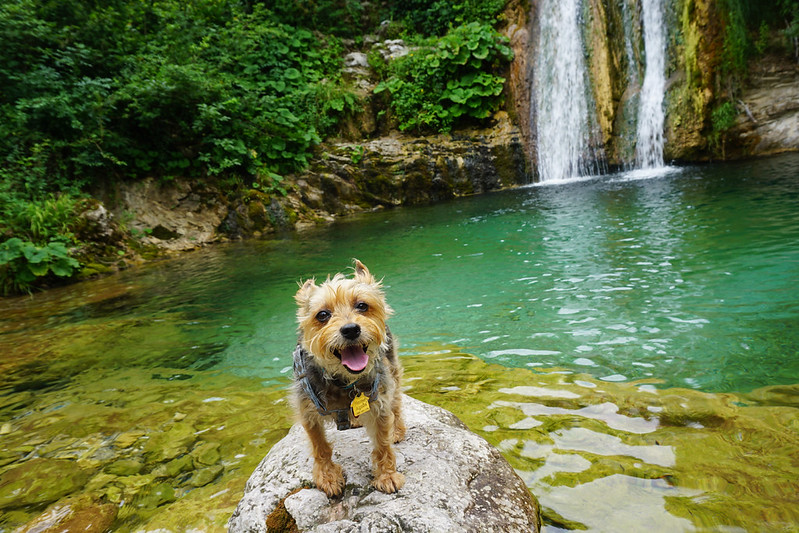 Waterfalls near Konjic, Bosnia and Herzegovina.
Austria
Ranking: 4
Reasoning: I haven’t spent as much time in Austria as I have in some other European countries (probably a cumulative five weeks over the last few years), but when Luna and I passed through Salzburg, Innsbruck, and Villach, we found each to be overwhelmingly pet-friendly. We were allowed in most restaurants and cafes without issue. Trains are pet-friendly. People were always happy to see Luna. Finding accommodations was always easy. And the only places Luna couldn’t go were grocery stores and perhaps some churches or museums.
Belgium
Ranking: 4
Reasoning: With several months of our lives invested in Ghent, Bruges, Antwerp, and the surrounding areas, Luna and I rarely ever encountered a place she couldn’t go. Finding accommodation was easy. Transportation was easy.People loved her and cute little grandmas would coo at her at the bus stops all the time. And the only places I didn’t take her were grocery stores, Asian restaurants (which generally don’t welcome dogs anywhere in Europe), and churches.
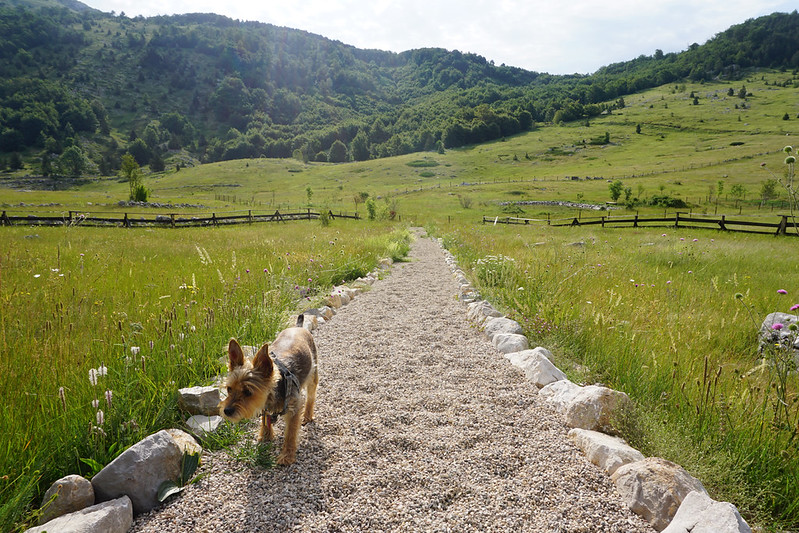 The mountains above Mostar.
Bosnia & Herzegovina
Ranking: 1
Reasoning: While it was easy finding a good rental that would take Luna and we didn’t have any trouble with the taxis we took across the country, we did run into some major cultural barriers to with-dog travel.
The biggest is that while there is a large group of locals who love dogs, there’s also a large group of locals/tourists that hate them. And I don’t mean they walk by and mind their own business hating dogs. I mean they would kick at Luna or jump away from her in an exaggerated manner or stomp their feet to scare her as we passed.
We also had trouble with transit (no one seemed to know if dogs were allowed on trains or buses, including the people who worked for said trains and buses, so we were told yes, she could go on the train, but then denied entry when we arrived).
Vets here are very nice and well-trained, but have limited access to facilities and medications in case of emergency, and the large group of people who were aggressive toward Luna during our stay (which was scary several times) is really what ranks this country so low for us.
Croatia
Ranking: 2.5
Reasoning: Finding accommodations was easy and we saw plenty of happy, healthy dogs out walking with their owners everywhere. We worked with excellent vets when Luna got horribly ill (this is where she got pancreatitis) and they were wonderfully affordable. And I’d say restaurants and cafes were about 50/50. Some allowed dogs; others didn’t.
The reason I’ve ranked this a little below average is the transportation. Train transit was fine, but in Croatia trains are limited. And the bus systems typically leave it up to individual drivers whether they want to take a dog. Sometimes this is fine (Luna and I took a bus from Split to Rovinj no problem) and other times it means the bus driver says nope and you’re stranded (which happened to us in Dubrovnik). This makes Croatia a tiny bit more of a hassle than your typical European country, though I’d still recommend it (just keep the transit challenges in mind).
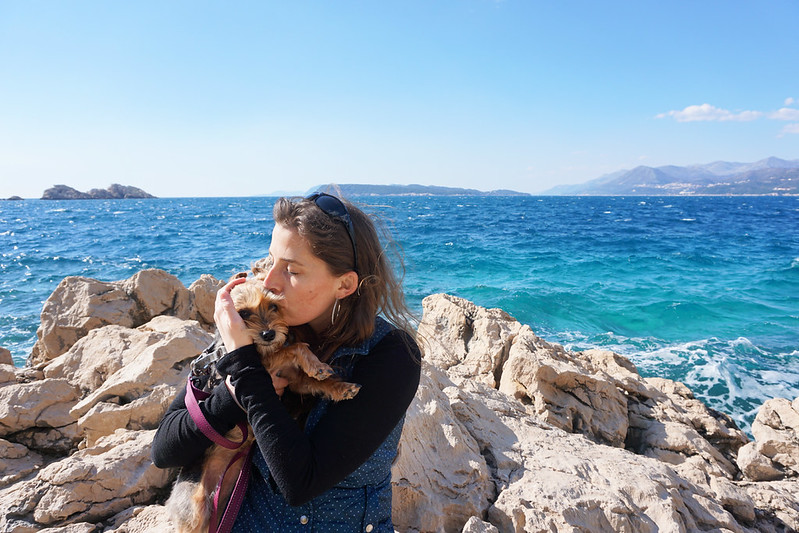 Dubrovnik, Croatia.
Czechia
Ranking: 2
Reasoning: I wish I could rank Czechia higher. Restaurants were dog-friendly (we even took Luna on a food tour) and transit was no problem. We found our apartment easily. And hiking with Luna in the national park up north was a joy.
BUT we also encountered some alarming xenophobia in Prague that included vet offices that refused to treat dogs for people who didn’t speak Czech. Heaven forbid, if Luna were in some sort of dire accident, I do not want to chance being in a place where she might be denied care just because I don’t fluently speak 20 languages. That’s absolutely unacceptable to me
Estonia
Ranking: 4
Reasoning: Dogs are welcome almost everywhere in Estonia. Dog-friendly hotels were easy to find, as were dog-friendly apartment rentals. Hiking trails, beaches, and shops – all dog-friendly. And trains, trams, and buses were mostly dog-friendly (signs indicate that dogs should be muzzled on trams and we took Luna on trains and buses in an open carrier).
The one exception to the generally dog-friendly transportation are cross-border buses, which did not allow dogs (you can get around this by either taking the train or taking a bus to the border, crossing on foot, and taking another bus). The only other place I saw no-dogs signs was on the main beach in Parnu.
France
Ranking: 3
Reasoning: France is my perfect average. Dogs are welcome in many restaurants and cafes. We were never bothered when we took Luna to fresh markets. Transportation was easy to navigate. And rentals were very easy to come by.
Some parks (especially in Rennes and Paris) are not dog-friendly (which is always baffling to me), but overall you’ll find France very easy to navigate with a dog.
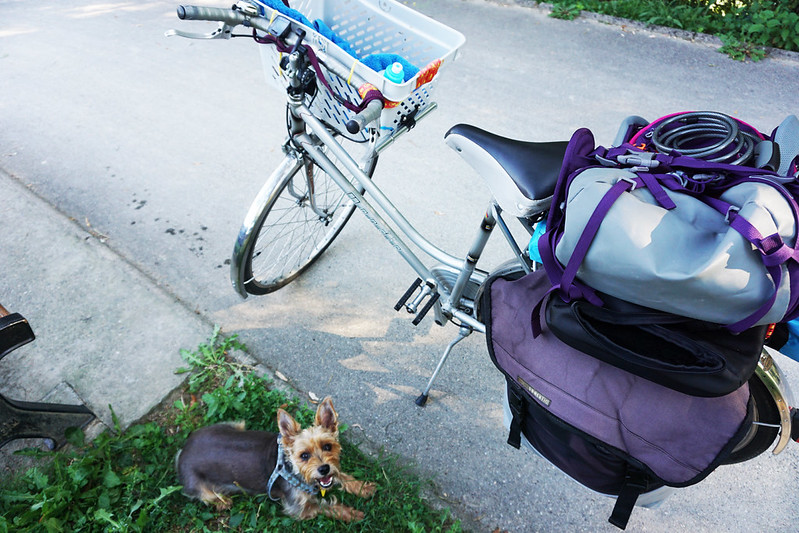 Cycling across France.
Germany
Ranking: 3
Reasoning: In general, dog-friendly accommodations, restaurants, and transit are easy to come by. Locals tend to keep to themselves, but the culture is overall welcoming to dogs.
Hungary
Ranking: 2.5
Reasoning: In general, we found Luna was welcome pretty much everywhere we went, including on our food tour (and in all the restaurants and cafes on the tour). Finding a hotel in Budapest was easy. We did run into a no-dogs sign at the fresh market, but nobody said a thing to us when I carried her through.
The only tricky thing was transit. The Hungarian train rules are a bit confusing (no dogs on any train or car that requires seat assignments according to the website, but that could mean several things), and we kind of crossed our fingers and decided to ask forgiveness rather than permission. Luna’s pretty quiet in her carrier and no one asked about her, but I’m honestly still not entirely clear on which trains she technically was and wasn’t allowed on.
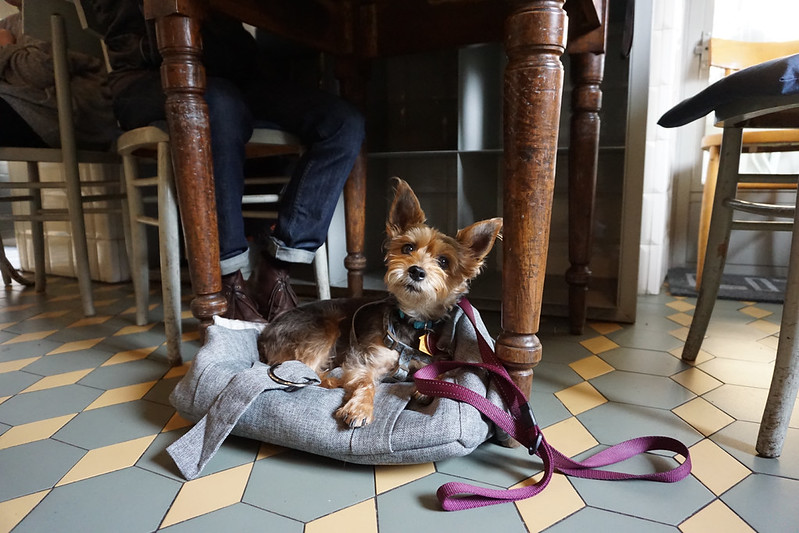 A restaurant in Rome, Italy.
Italy
Ranking: 4.5
Reasoning: Accommodations, trains, stores, restaurants…it’s all so easy to navigate with a dog in Italy! Not to mention that locals have loved her pretty much everywhere we’ve gone – from Modena to Rome to Sicily. Occasionally you’ll run into something that isn’t dog-friendly, but it’s extremely occasional and Italian culture is extremely forgiving, so nobody’s going to hunt you down to yell at you if you’ve wandered into a no-dogs-allowed covered market. We even saw dogs in grocery stores in Florence, so seems like there’s very little off-limits to dogs.
Latvia
Ranking: 4.5
Reasoning: I was pleasantly surprised to find that Latvia is one of the most dog-friendly countries we’ve been to in Europe. In my 10 days of walking the coast from Riga to the Estonian border, I only saw one beach with a no-dogs-allowed sign. Trails were dog-friendly. Hotels with good pet policies were easy to find. Restaurants rushed to bring dog bowls full of water over to the table. I even carried her into several rural grocery stores while we were hiking and nobody cared.
Lithuania
Ranking: 4
Reasoning: Our stay in Lithuania was very brief (just a long weekend in Vilnius), but the experience was very positive. We had no trouble finding dog-friendly accommodations. We took Luna into several restaurants without incident (and saw other dogs there as well). And we were thrilled at all the parkland/green areas to walk her in throughout the parts of the city we explored.
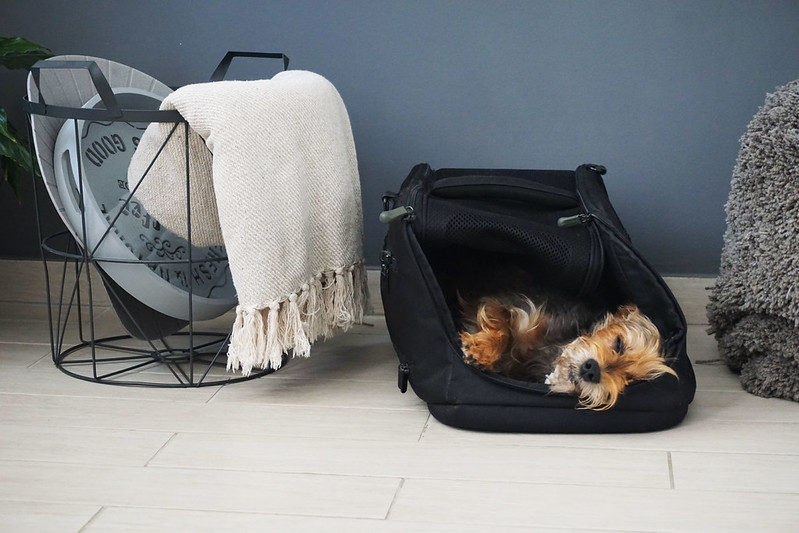
Naps in Opatija, Croatia.
Malta
Ranking: 3
Reasoning: Dog-friendly apartments were easy to find. Hotels were a bit trickier, but we were also there in winter and not as much was open, so summertime might be a much easier task. Transit was also easy (buses never blinked an eye at us). The lovely hiking trails were all dog-friendly. And I took Luna into many restaurants without issue.
The one thing that does make Malta a little trickier is its location (an island south of Italy), which means to get there you’ll need to fly (and the maximum size allowance I’ve been able to find in cabin for Malta is 20 lbs, so any bigger dogs will have to brave cargo). You’ll also need a special vet visit to get Malta health approval in your pet passport a few days before travel (and then another health certificate to leave).
Montenegro
Ranking: 2.5
Reasoning: Montenegro is similar to Croatia. Which means the trickiest thing here is transportation. People seemed amazed and somewhat uncomfortable when we took her in taxis or cars. And for buses, it’s always up to the bus driver whether you can board with your dog. The first time we took a bus, they didn’t even glance at her. The second time, the driver seemed very unhappy about it, but eventually decided to let us board instead of waiting for the next bus.
Technically, dogs aren’t allowed indoors at restaurants, but you’ll generally find them welcome on patios and occasionally you might find an indoor space that looks the other way.
We also got the sense that pet dogs were a little rarer here than in other parts of Europe. There were a lot of big, loud guard dogs chained up in people’s yards (and sometimes not chained, so do keep an eye out and whisk your small dog up into your arms as needed) and we were ambushed once by a dog that appeared to be trying to bite Luna (Chad ended up chasing the dog down the block shouting while I grabbed Luna and lifted her into my arms in the nick of time).
So, overall I would recommend Montenegro to with-dog travelers, but don’t expect it to be as dog-friendly as the rest of Europe and do keep an eye out for potential aggressive dogs.
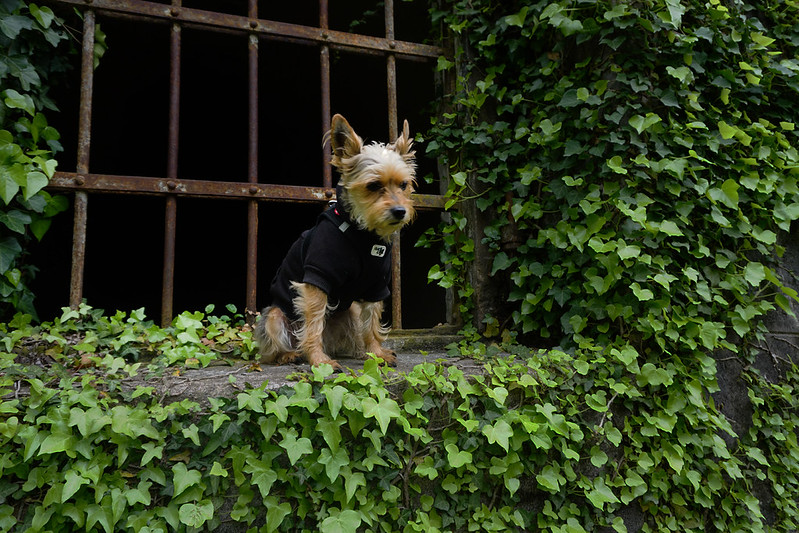 Exploring an abandoned fortress in Montenegro above Kotor.
Netherlands
Ranking: 3
Reasoning: I only spent a couple weeks in the Netherlands, so take this one with a grain of salt. It might actually be a 4 on my scale. Accommodations and transit were super easy with Luna, but navigating the exceptionally busy streets of Amsterdam was a challenge just because of how many people and bikes were everywhere.
Portugal
Ranking: 2.5
Reasoning: Unlike much of Europe, sadly Portugal often does not allow dogs indoors in restaurants, cafes, etc. It’s very much a case-by-case basis and you may find yourself without an indoor eating option on a rainy or cold day. That said, Portugal tends to be sunny and warm and dogs are generally welcome on patios and balconies.
Transportation here is also a bit hit or miss. Trains are dog-friendly (with your dog in a carrier), as are city buses and metros. But distance buses vary, which can leave you in quite a pickle if you don’t plan ahead. Similarly, I’ve found that accommodations are harder to find here with a pet when compared to the rest of Europe. So while I have chosen to live in this country, I would say it is a little less pet-friendly than the average European locale.
Romania
Ranking: 2
Reasoning: Romanians love dogs. Train travel was simple. Local buses didn’t bat an eye at us. Our vet was great. And finding apartment rentals was easy.
We did have trouble finding hotels (honestly, the most trouble I’ve had anywhere in Europe), so that pushes it a bit below average, and the vast majority of restaurants and cafes in Brasov were not dog-friendly, so expect to eat on patios or leave your pooch behind.
 Lake Bled, Slovenia.
Slovenia
Ranking: 4.5
Reasoning: Slovenia is the most dog-friendly place I’ve ever been. I had no trouble finding accommodations, taking Luna into restaurants, cafes, and stores, or taking trains all over the country. They even let me take her in a church! (Which is pretty much unheard-of anywhere else in Europe.)
I did have one bus driver tell me they normally don’t take dogs, but no one else ever said anything and even that bus driver told me I could stay on anyway.
Spain
Ranking: 2
Reasoning: Finding accommodations was pretty easy, but I encountered a lot of no-dogs signs on restaurants, stores, and cafes and the bus systems in Spain are generally unfriendly to dogs. We were forced to take a car service along the coast because no one would transport Luna via bus and there was no train option. It’s also worth keeping in mind that there’s a very toxic caterpillar in the south, so it’s worth researching times of year to visit and avoid that little guy.
I didn’t feel unsafe with Luna in Spain overall, but it’s a much bigger hassle to travel there with a dog than it is in most parts of Europe.
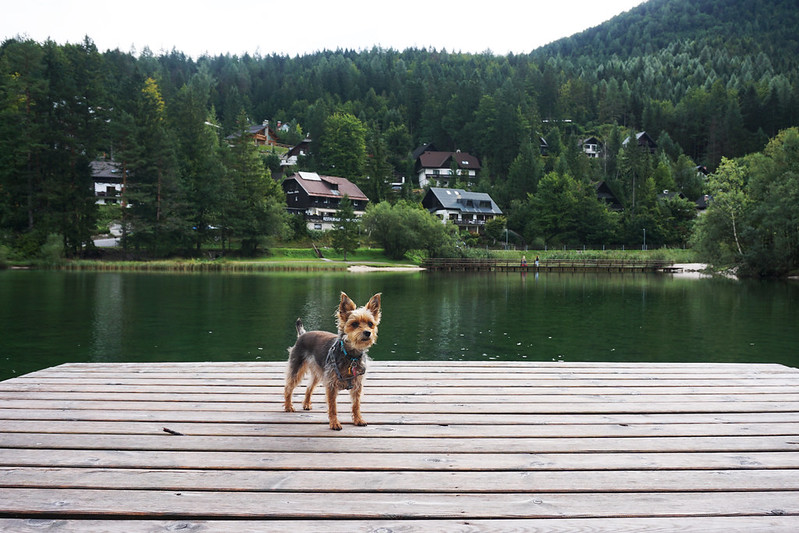 Lake Jasna, Slovenia.
Switzerland
Ranking: 4
Reasoning: Transit is pet-friendly. Hotels and apartments are easy to come by. Restaurants and cafes are usually fine with dogs. I don’t think I’ve ever seen a No Dogs Allowed sign on a public park. And take a dog to the pub and you’ll be the most popular person around. The only places you won’t see pets are grocery stores, Asian restaurants, and maybe churches.
United Kingdom
Ranking: 2.5
Reasoning: Ever so slightly more dog-friendly than the US, the UK is good with transportation (trains take dogs, no problem) and dogs are often allowed in pubs. However, I did have a tricky time finding accommodations for a with-dog traveler in a reasonable price range (it’s an expensive place and a lot of the budget options were no-dogs). Getting to the UK is also tricky (only ESAs and guide dogs can fly in-cabin on the airlines, there are no pets on the Eurostar, and only a select few ferries allow dogs). And it mirrors the US in that restaurants do not allow dogs inside. So expect it to be a tiny bit easier than traveling within the US with a dog, but not by much.
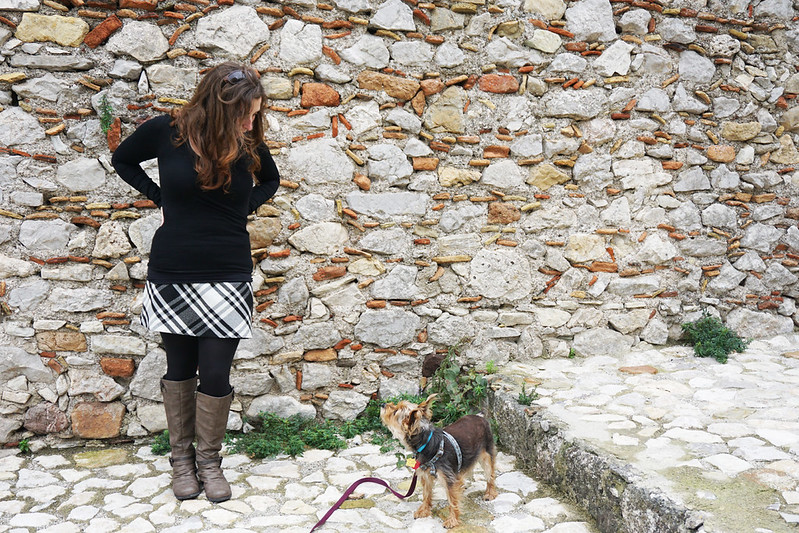 In a fortress above Taormina, Sicily, Italy.
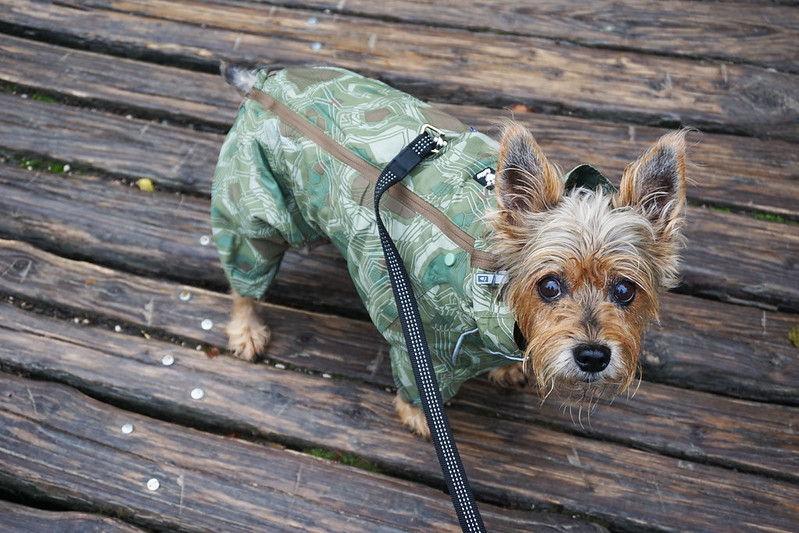
Hiking in the rain in Plitvice Lakes, Croatia.
Now, to you: What have your experiences been like across Europe? Which countries feel particularly dog-friendly to you?